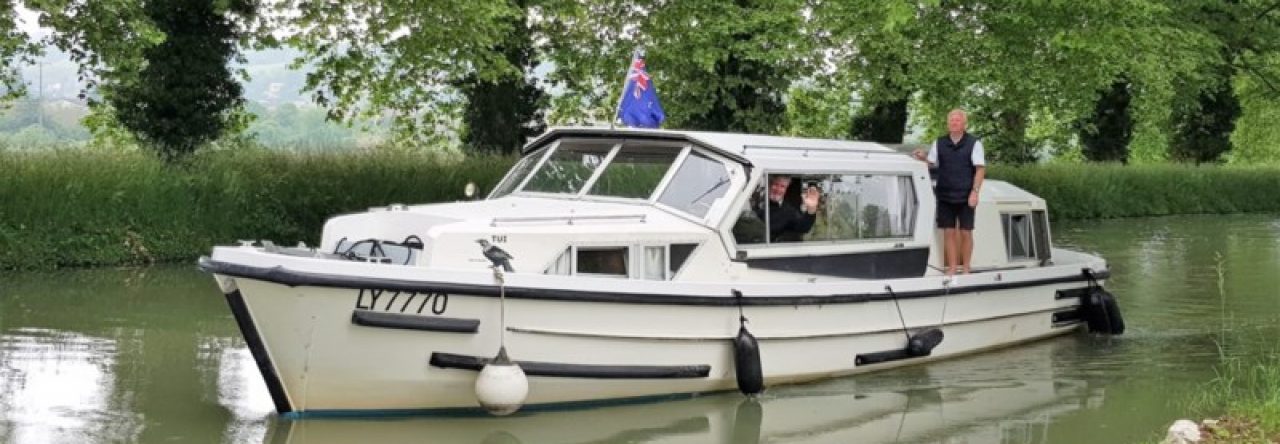
Before Starting Each Day:
- Look in the engine locker and ensure that it is not filling up with oil or water.
- Check that the fan belts are ok with about 2 cm of play.
- Check the water level in the heat exchanger (radiator cap).
- At the beginning of your trip and then about every 10 hours check the oil level on the dipstick. The only oil to use is fully synthetic 10W-40. The dipstick measures 500 ml between the full and empty lines.
- If you have been traveling through leafy water it is a good idea to check the water filter which is just forward of the engine on the bulkhead starboard side.
- Undo the cap by rotating anti clockwise and lift the lid off the water
filter. - Then pull out the removable strainer basket and clean out any rubbish
and then replace.
New pic below needed.
When Starting From Cold:
- Ensure that the gear lever is in neutral, pull it out towards the right disengages the prop) and give it about 2cm of forward throttle.
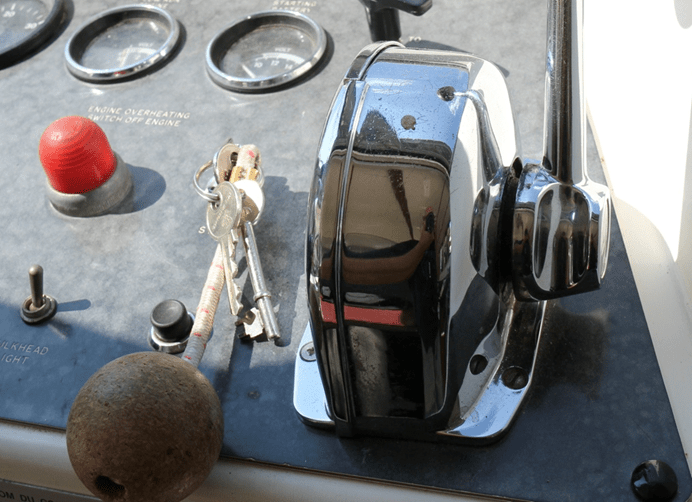
- Turn the key on, press the engine heater button (glow plug) for 20-30 seconds then the turn the key further to engage the starter motor.
- The engine usually starts straight away. (If you get smoke you have not used the glow plug for long enough).
- Pull out the gear change lever to disconnect the gear box and move
to increase engine idle revs to let the engine run at 1100 revs for about 4 minutes before taking off as this allows it to warm-up. - Check that cooling water is coming out the exhaust at the stern of the boat. The flow rate should resemble a slow garden hose.
- When starting while the engine is warm there is usually no need to use the glow plug.
Note. There is a heat exchanger on the engine which provides hot household water once the engine has been running for a while. It will take about an hour’s running to fully heat the engine fed hot water cylinder.
Steering
The steering is hydraulic.
- The filler cap under the steering wheel should be undone and the hydraulic oil level checked occasionally.
a. Excess oil from overfilling will run down the panel under the steering wheel.
Gauges
Whilst underway, keep a regular watch on the engine gauges and in particular the temperature gauge.
If you see the temperature gauge climb to 90degree or so, it is normally an indication that you have weed wrapped around the water intake, this intake is amidships by the keen and although the bronze intake skin fitting has a grill to prevent intake of weed, long strands of weed can block it.
Weed can also foul your propeller and/or rudder. You may hear the engine revs drop slightly of the steering starts to feel sluggish.
The remedy is:
- Check it is clear behind and then to bring your throttle/gear lever to a neutral position and when at nearly zero speed.
- Apply reverse gear and lift engine revs to 1600/1800rpm until you see the propeller wash coming past the bow with chopped canal weed come out from under Tui.
- That should have cleared it. Continue on your way, or if necessary, repeat the procedure.
Note: Areas like Port Sable, Meilhan, Castets en Dorte on the Canal du Garonne are particularly bad for weed, as is the Montech Canal.
Fuel
The fuel tank is filled through the rearmost of the two brass fillers. Use the key
spanner hanging beside the rear left-hand exit door.
Diesel is called ‘gasoil’ in France. Occasionally you can fill up at a canal side jetty at some of the ports but there are two fuel containers, a small trundler and some elastic straps in the rear lockers if you wish to use a service station where the gasoil is usually cheaper.
The fuel gauge is rather rudimentary but it works. It is a round hardwood stick under the main fuel tank by the drain tap access under steps.
- Lower this into the tank until it touches the bottom, be gentle, the tanks are 30 years old so need to be treated with great care.
- Then pull it out and measure the depth of the gasoil in the tank from the stick.
- Each centimetre on the stick equals approximately 4 litres of fuel.
- The tank holds approximately220 litres of gasoil.
Keep a record of the amount of time in hours that you run the motor for (engine hour gauge beside driver’s seat above the water gauge). Then multiply the running time in hours by 1.8 to give an idea of how many litres of fuel you will need to replace. (Hour Gauge currently not working – 6/8/22)
There is a funnel in the rear left locker. Be sure to carefully wipe all diesel from the deck around the filler if you spill some—it makes the fiberglass deck hugely slippery if left.
A keel-hauling and public flogging await anybody who puts diesel in the water tank or vice versa!
Bilge Pump
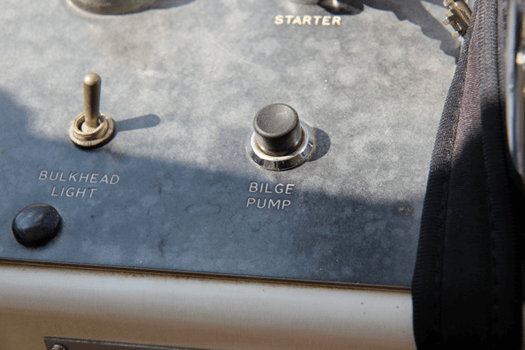
Water can get into the bilges in any number of ways, so every morning, especially if it has been raining, pump the bilge by pressing the button on the dash.
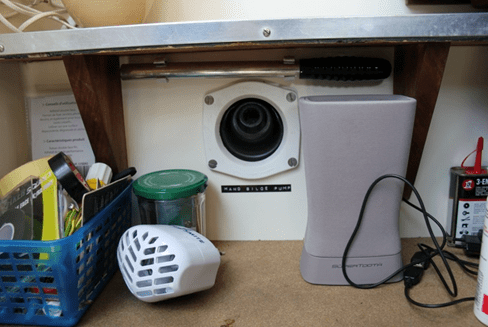
Propeller
The single propeller is shaft driven and is connected by a short shaft to the hydraulic drive unit. The drive unit requires no day to day maintenance. Also, in this area is the ‘Stuffing Box’ which provides a watertight seal for the rotating shaft that drives the prop. The traditional stuffing box and hydraulic drive unit are located under the kitchen floor hatch.
Periodically the hatch should be lifted and the stuffing box inspected for leaks. If water is dripping from it then it needs to be tightened. This is accomplished by using a 16mm AF ring spanner and rotating each of the two nuts on the box clockwise by a quarter of a turn.
Observe the result for half a minute, by which time the dripping should have stopped. If not, repeat the process.
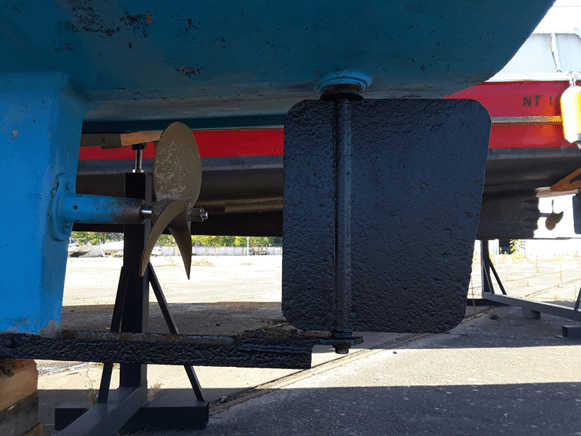
 Canal Boat Tui